
Florida's School System Decoded: A Newcomer's Guide to Public, Private, and Charter Options
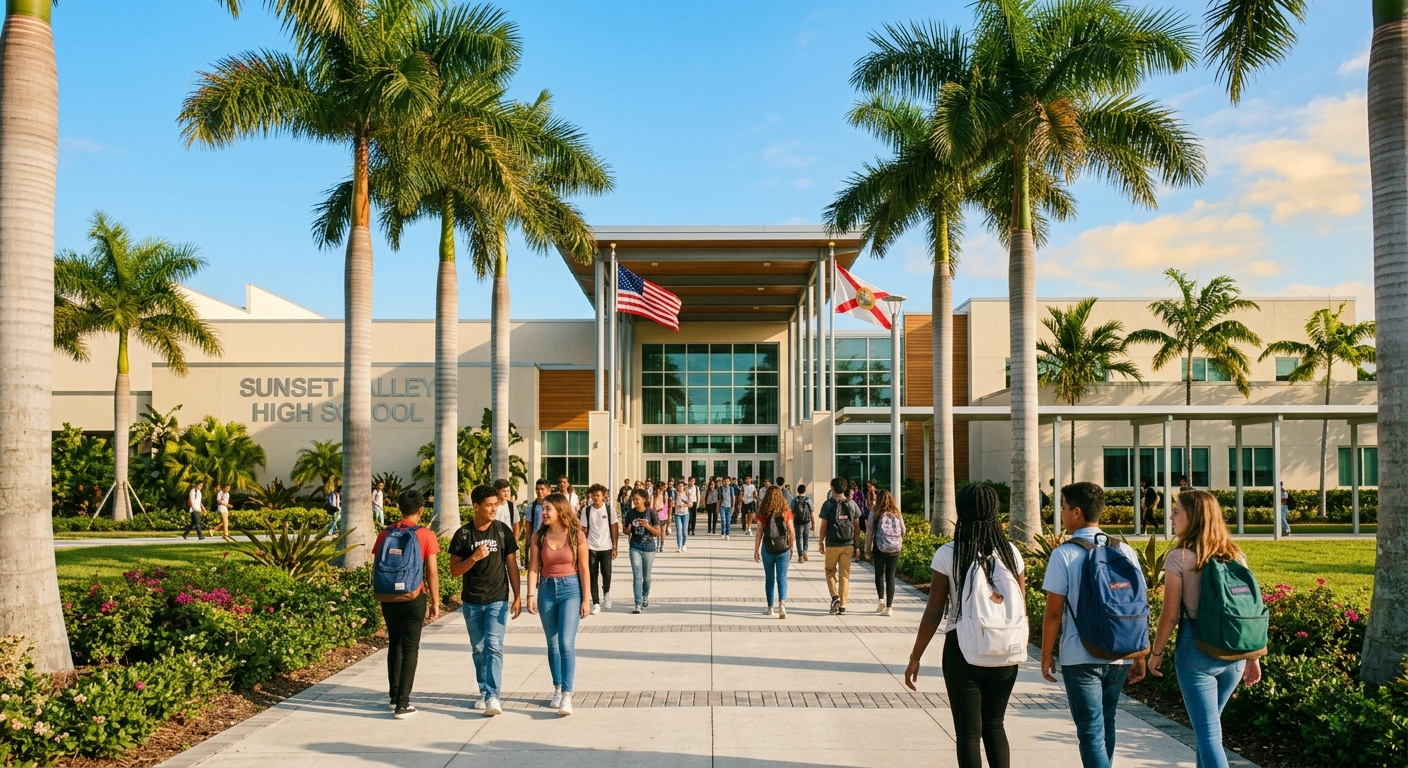
You've found the house. You've mapped out the commute. You've even figured out the closest Publix. But if you're moving to Florida with children, there's one decision that will shape your family's experience here more than almost anything else: choosing the right school.
Florida's education landscape is unlike anything you'll find in New York, California, or the UK. It's sprawling, decentralized, and full of options — which is both a gift and a source of genuine confusion for newcomers. The good news is that once you understand how the system works, you'll realize that Florida offers an extraordinary range of choices. The key is knowing where to look.
The A-F School Grading System
Florida is one of the few states that assigns every public school a letter grade — A through F — based on standardized test performance, learning gains, graduation rates, and other measurable outcomes. These grades are published annually by the Florida Department of Education and are publicly accessible.
For families relocating from states or countries without an equivalent system, this is both helpful and misleading. Helpful because it gives you a quick snapshot. Misleading because a "B" school in an affluent area might offer a very different day-to-day experience than a "B" school elsewhere. Use the grades as a starting point, not a verdict. Visit campuses, talk to other parents, and look at the specific programs each school offers.
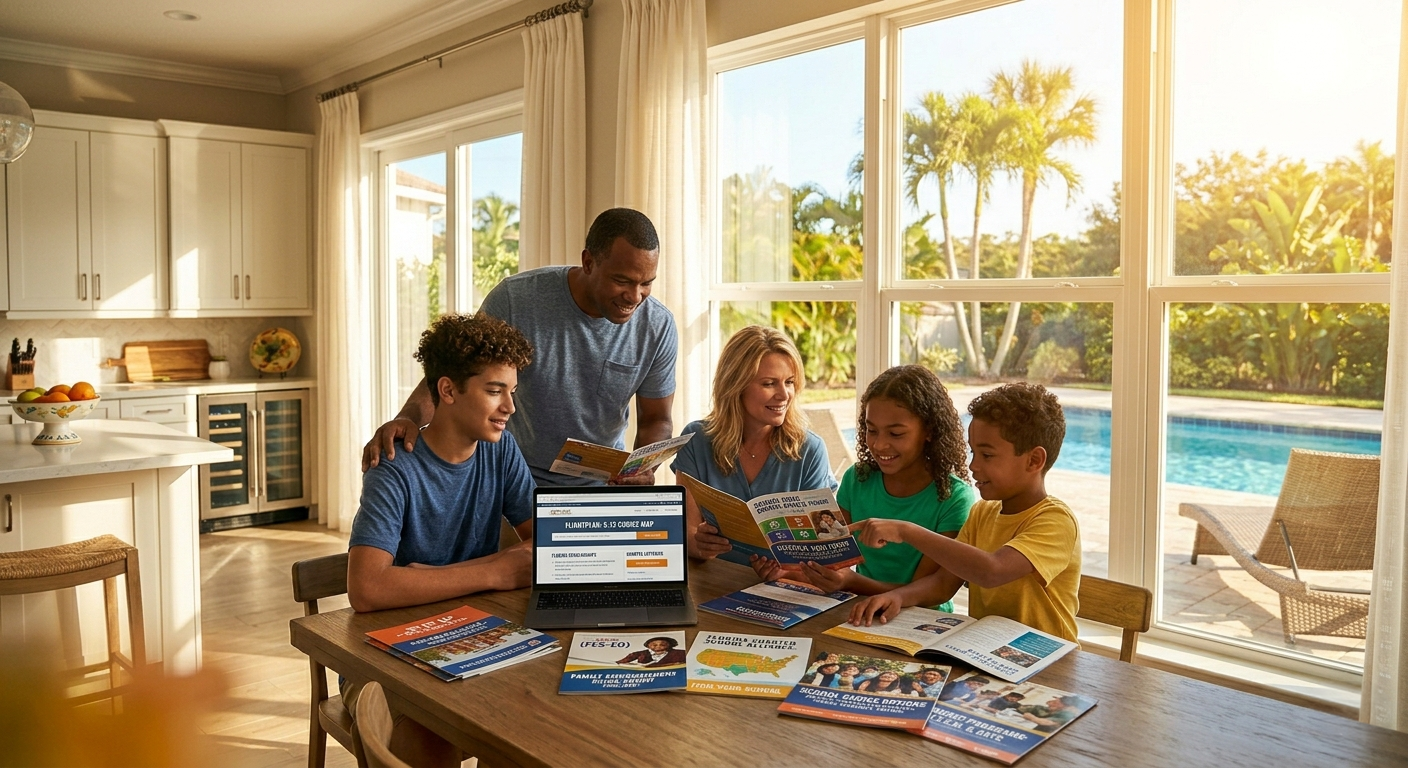
Public Schools: Bigger, More Resourced, and More Varied Than You'd Expect
Florida's public school system is the third largest in the United States. Each county operates as its own school district, which means the quality, culture, and resources can vary significantly depending on where you live. In Southeast Florida — particularly Palm Beach County, Broward County, and Miami-Dade — you'll find a wide range of public school options, including highly rated neighborhood schools, magnet programs, and dual-language immersion programs.
Magnet schools deserve special attention. These are public schools with specialized curricula — STEM, performing arts, International Baccalaureate, Cambridge programs — that draw students from across the county, not just the immediate neighborhood. Admission is typically by application, and deadlines vary by district, so planning ahead is essential.
Key enrollment details newcomers often miss:
Enrollment is tied to your residential address. You'll need proof of Florida residency (utility bill, lease, or closing documents) to register.
Immunization records must meet Florida-specific requirements. If you're coming from overseas, expect to need additional vaccinations or updated documentation.
The school year typically begins in mid-August — earlier than many Northern states and significantly earlier than the UK.
Open enrollment periods for magnet and choice programs often begin in January or February for the following school year. If you're planning a summer move, start researching months in advance.
Charter Schools: Public Funding, Independent Operation
Charter schools in Florida are publicly funded but independently operated. They don't charge tuition, and they're open to all students — though many have waitlists, especially the well-established ones. What makes Florida's charter school landscape unique is its sheer scale. The state has more than 700 charter schools, and in South Florida, some of the most sought-after options rival top private schools in terms of facilities, academic outcomes, and extracurricular offerings.
Charter schools often have smaller class sizes, specialized academic philosophies, and more flexibility in curriculum design. Some focus on classical education, others on project-based learning, and others on college prep starting in middle school.
The catch is that quality is inconsistent. Some charter schools are exceptional; others have struggled financially or academically. Research each school individually, check its most recent state grade, and if possible, visit before committing.
Private Schools: A Deep Bench in South Florida
South Florida's private school market is robust and growing. From nationally recognized college-prep institutions to smaller faith-based schools, the options span a wide range of philosophies, price points, and communities. In Palm Beach County alone, families relocating from the Northeast or the UK will find campuses with world-class facilities — think Olympic pools, equestrian programs, and robotics labs — alongside more traditional, academically rigorous schools with smaller, close-knit communities. These schools include Pinecrest, St Andrew’s and American Heritage.
A few practical notes for newcomers:
Tuition ranges widely. Top-tier private schools in South Florida can run $30,000 to $50,000+ per year, but many excellent options exist in the $10,000 to $20,000 range.
Admissions timelines vary. Some schools accept rolling admissions for mid-year transfers, which is a lifesaver for families relocating outside the normal cycle. Others have strict fall-only enrollment.
Don't overlook financial aid. Many private schools in Florida offer need-based and merit-based scholarships, and the state's Step Up For Students scholarship program provides tuition assistance for qualifying families at participating private schools.
For Families Coming From the UK
If you're relocating from Britain, a few differences will jump out immediately. Florida doesn't have the UK's rigid Key Stage structure or GCSE/A-Level system. The curriculum is broader and more flexible, with Advanced Placement (AP) and International Baccalaureate (IB) programs serving as the closest equivalents for older students. Several South Florida schools offer the Cambridge curriculum or IB programs, which can ease the transition for children who've been in the British system. And the social adjustment tends to be smoother than parents expect — Florida's schools are accustomed to welcoming families from elsewhere, and the international mix in South Florida means your child won't be the only new arrival with an accent.
The Bottom Line
Florida gives families more educational choice than almost any state in the country. But choice without information is just noise. Start early, research broadly, and don't hesitate to reach out to someone who knows the local landscape — it'll save you months of uncertainty.
Thinking about relocating to Florida and want guidance on finding the right school district and neighborhood for your family? Reach out to Adam Jacobs at adam@jacobsrelocation.com — he's helped dozens of families navigate this exact transition and can help you make the right move.