
Florida in the Off-Season: Why May Through October Is Actually the Best Time to Be Here
The brochure version of Florida is a winter story. Snowbirds fleeing the cold. Packed restaurants in February. Perfect 75-degree days in December. And that version is real — Florida's winters are magnificent.
But if you ask someone who actually lives here year-round when they enjoy Florida the most, you'll hear a surprising answer: summer.
The off-season — roughly May through October — is when Florida becomes a different place entirely. The crowds thin out, the prices drop, the beaches empty, and the people who remain discover a quieter, more spacious, more authentically Floridian experience. It's not without its trade-offs, but for full-time residents, the off-season is when the state feels most like home.
The Crowds Disappear
This is the most immediate and dramatic change. From November through April, South Florida's population swells by hundreds of thousands of seasonal residents and tourists. Restaurants require reservations weeks in advance. Beach parking fills by 10 a.m. Traffic on A1A becomes genuinely unpleasant.
Then May arrives, and the snowbirds head north. Suddenly, you can get a table at your favorite restaurant on a Friday night without planning ahead. The beach has open stretches of sand. The grocery store at 5 p.m. is calm. The roads breathe.
For residents who've just survived their first winter season, this decompression is revelatory. You realize that the Florida you fell in love with — the spacious, easy, unhurried version — never left. It was just hiding under a few hundred thousand extra people.
The Deals Are Remarkable
Florida's hospitality and service industries price for demand, and off-season demand is significantly lower. That translates into genuine savings across the board.
Hotel rates at luxury resorts drop dramatically — sometimes 30% to 50% below peak season. Spa packages, golf memberships, and restaurant promotions proliferate. If you've been wanting to try that new restaurant in Palm Beach or book a weekend at a boutique hotel in the Keys, summer is when it becomes accessible.
For families, this is especially valuable. Children's activities, summer camps, and attractions like water parks and nature preserves are less expensive and less crowded. You can visit places that would require advance booking and long waits during the winter months and walk right in.
The Weather Is Misunderstood
Yes, it's hot. Florida summers are warm and humid, with daily highs typically in the low 90s from June through September. But the experience of living in this heat is very different from visiting in it.

Florida is built for summer. Every home, car, office, restaurant, and shopping center is air-conditioned to the point of being chilly. The transition from air conditioning to outdoors and back again is a rhythm you adjust to within weeks. Your daily schedule naturally shifts — outdoor activities happen in the early morning and late afternoon, and the hottest hours are for indoor work, errands, or a midday swim.
The afternoon thunderstorms deserve their own mention. Nearly every summer day in South Florida follows the same pattern: sunny morning, building clouds by early afternoon, a dramatic 30-to-45-minute downpour around 3 or 4 p.m., and then clearing skies by evening. These storms are spectacular — towering cumulonimbus clouds, vivid lightning, warm rain — and they serve a practical purpose: they cool everything down by several degrees, making the evenings genuinely pleasant.
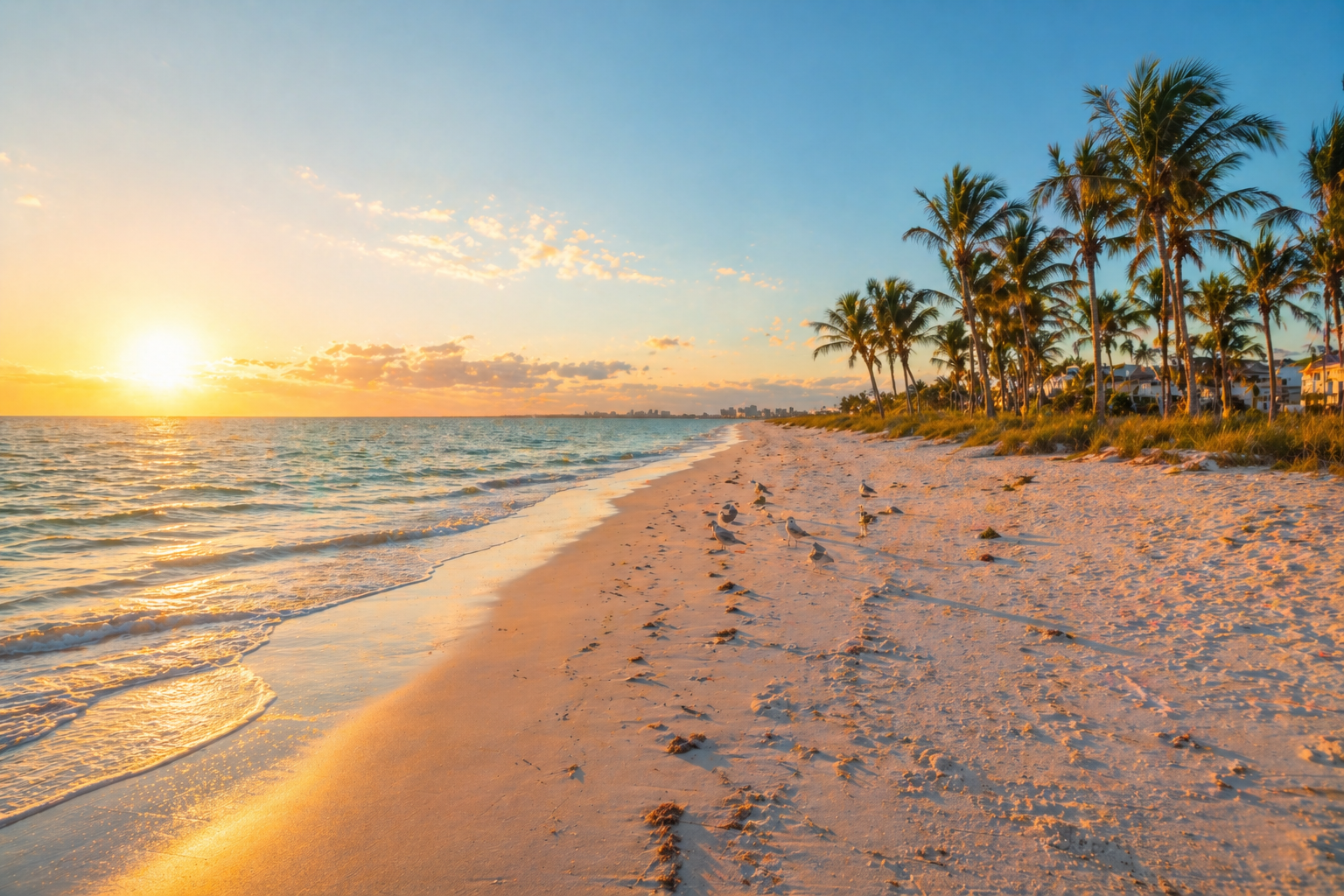
Florida sunsets in the summer are also extraordinary. The combination of lingering humidity and post-storm cloud formations creates colors that feel almost artificial. Watching the sky turn from gold to pink to deep purple from your backyard or a waterfront restaurant is a daily reward that never gets old.
The Water Is Perfect
Florida's ocean water temperature peaks during the summer months, reaching the low to mid-80s along the Atlantic coast. For swimmers, snorkelers, and anyone who enjoys being in the water (rather than just looking at it), this is the best time of year.
The calm, warm water is ideal for families with young children. Beaches that feel bracing in January are bathtub-warm in July. And the marine life is more active — sea turtle nesting season runs from May through October, and if you're on the right stretch of coast, you may witness hatchlings making their way to the ocean.
Boating, kayaking, paddleboarding, and fishing are all at their best during the summer months. The Intracoastal Waterway is less crowded, and the conditions for water sports are consistently excellent.
The Locals-Only Rhythm
There's a social shift that happens in the off-season. With the seasonal population gone, the communities that remain become tighter and more visible. Local restaurants feel like neighborhood spots again. Business owners have time to chat. The farmer's market returns to a manageable size where you actually recognize the vendors.
For families who are new to Florida, the off-season is paradoxically one of the easiest times to build connections. The locals who are here year-round are the foundation of the community, and they're more available, more relaxed, and more open during the summer months. Block parties, neighborhood cookouts, and casual gatherings happen more frequently when everyone isn't jockeying for space with tourists.
Many of the cultural institutions — museums, galleries, performing arts centers — offer special summer programming at reduced prices. The Norton Museum of Art in West Palm Beach, the NSU Art Museum in Fort Lauderdale, and the Pérez Art Museum in Miami all run summer exhibitions and events that draw smaller, more engaged crowds.
The Practical Advantages
Beyond lifestyle, there are practical reasons why summer is a smart time to be in Florida:
Home maintenance is easier to schedule. Contractors, landscapers, and home service providers are significantly less booked during the off-season. If you need work done on your home, summer is when you'll get faster response times and, often, better pricing.
Real estate transactions are calmer. The buying and selling market cools along with the population. If you're still house-hunting or considering an upgrade, summer gives you less competition, more negotiating leverage, and more time to evaluate properties without the pressure of a bidding war.
Travel from Florida is ideal. Flights from South Florida's airports to domestic destinations are often cheaper and less crowded during the summer. And if you want to take advantage of Europe's summer season, direct flights from Miami and Fort Lauderdale to London, Paris, and Madrid make it easy.
The Honest Caveat
Florida summers aren't for everyone. If you genuinely dislike heat and humidity, the months from June through September will test you. The afternoon storms, while dramatic and beautiful, can disrupt outdoor plans. And hurricane season (June through November) requires a baseline level of awareness and preparation — though as we've covered elsewhere, the actual disruption in most years is minimal.
But for those who embrace it — who learn the rhythm of early-morning beach walks, afternoon siestas, and sunset dinners — Florida's off-season is not the consolation prize. It's the main event.
Considering a year-round move to Florida and want to see what the off-season lifestyle really looks like? Reach out to Adam Jacobs at adam@jacobsrelocation.com — he'll give you the unfiltered, year-round picture.