
Nobody talks about this part enough. You can find the perfect house, the right school, the ideal tax setup — and still feel profoundly lonely at 7 p.m. on a Tuesday when you realize you don't have a single person to call for a casual dinner.
Relocating to Florida means rebuilding your social life from scratch. That's true whether you're coming from London, New York, Chicago, or São Paulo. And it's the part of the move that most people underestimate — not because it's impossibly hard, but because it requires a kind of intentional effort that most adults haven't had to make since college. The good news? Florida's social landscape is uniquely suited to newcomers. Here's why, and how to take advantage of it.
Florida's Transient Culture Is Actually Your Biggest Asset
Unlike cities with deep generational roots — where social circles formed in elementary school and never really opened up — South Florida is a place where almost everyone is from somewhere else. That shared experience of being new creates a remarkable openness to meeting people and forming connections.
Walk into any social gathering in Boca Raton, Delray Beach, or Jupiter, and within five minutes you'll hear accents from New York, New Jersey, the Midwest, Latin America, the Caribbean, and the UK. The ice-breaking question isn't "where did you go to high school?" — it's "where did you move from, and when?" That question opens doors.
This transient culture means people are actively looking for new friends. They understand the effort required because they've made it themselves. The result is a social environment that's warmer, more receptive, and faster-moving than what you'll find in most established communities elsewhere.
Start With the Infrastructure That Already Exists
South Florida has an extensive network of clubs, organizations, and groups designed specifically for people who are building a life here. The key is to say yes to things before you feel ready.
Country clubs and social clubs play a different role in Florida than they do in the Northeast or the UK. Here, they're less about exclusivity and more about community. Many families find their core social circle through their club — tennis, golf, dining, and kid-friendly events create a steady rhythm of interaction that accelerates friendships.
Religious communities are another powerful connector. South Florida has a rich landscape of churches, synagogues, mosques, and non-denominational communities, many of which run welcome programs, social groups, and family events specifically designed for newcomers.
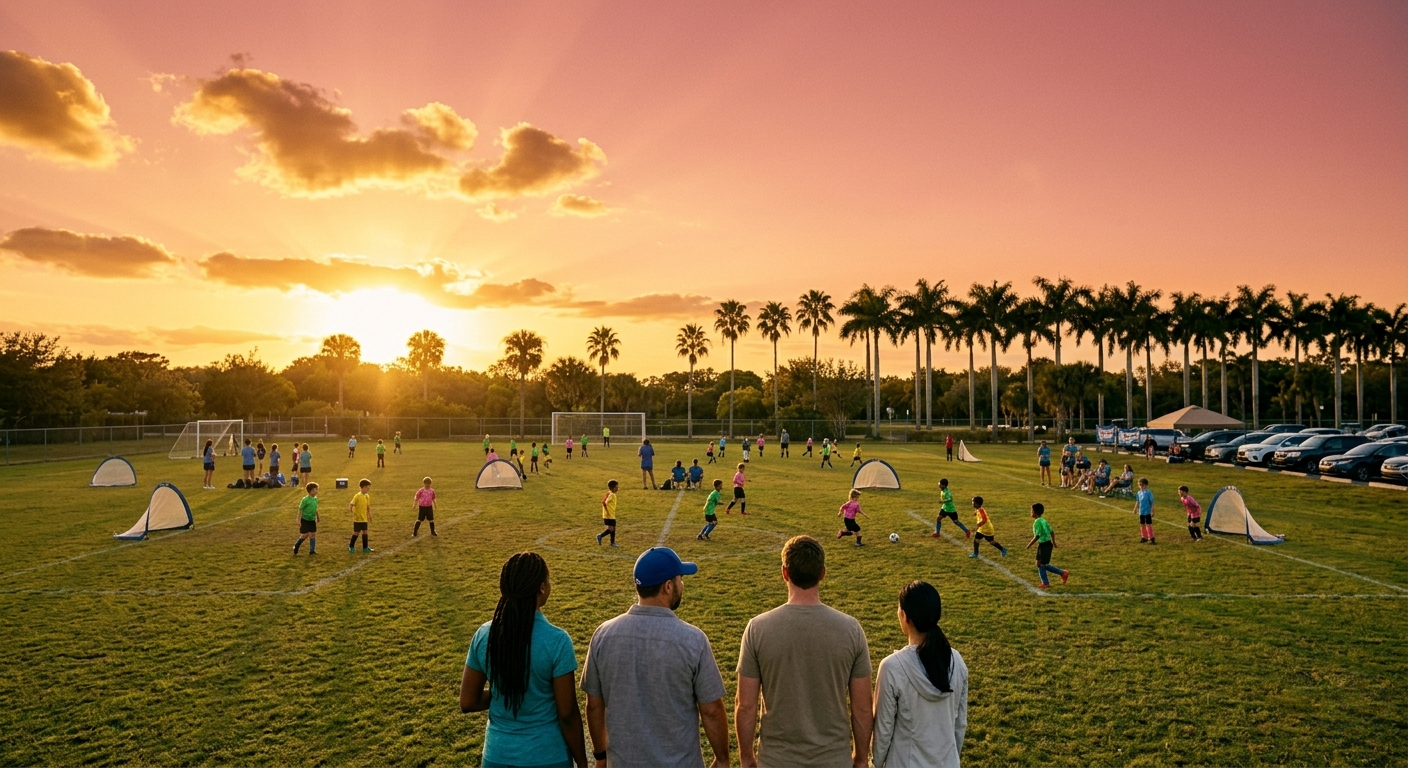
Youth sports leagues are one of the fastest pathways to parent friendships. Soccer, baseball, swimming, tennis — the sidelines of your child's Saturday morning game are where you'll meet other families in your exact situation. Show up, introduce yourself, and suggest a post-game coffee.
Professional networking groups abound. The Young Presidents' Organization (YPO), Entrepreneurs' Organization (EO), local chambers of commerce, and industry-specific meetups are all active in South Florida. If you're a remote worker, coworking spaces like those in Delray Beach and West Palm Beach offer built-in communities of professionals who understand the work-from-Florida lifestyle.
The Six-Month Rule
Here's what experienced relocators will tell you: the first three months are a honeymoon. Everything is new, exciting, and bathed in sunshine. Months four through six are when the dip hits. The novelty fades, you miss your old friends, and the effort of constantly introducing yourself starts to feel exhausting. This is normal. It's not a sign that the move was a mistake — it's a sign that you're human. The families who push through this period and keep showing up are the ones who, by month nine or ten, realize they've built something real. The friendships that form during a shared relocation experience tend to be surprisingly deep, precisely because everyone involved knows what it took to make them.
Practical Tactics That Work
Beyond joining organizations, there are a few specific strategies that consistently help relocating families build connections faster:
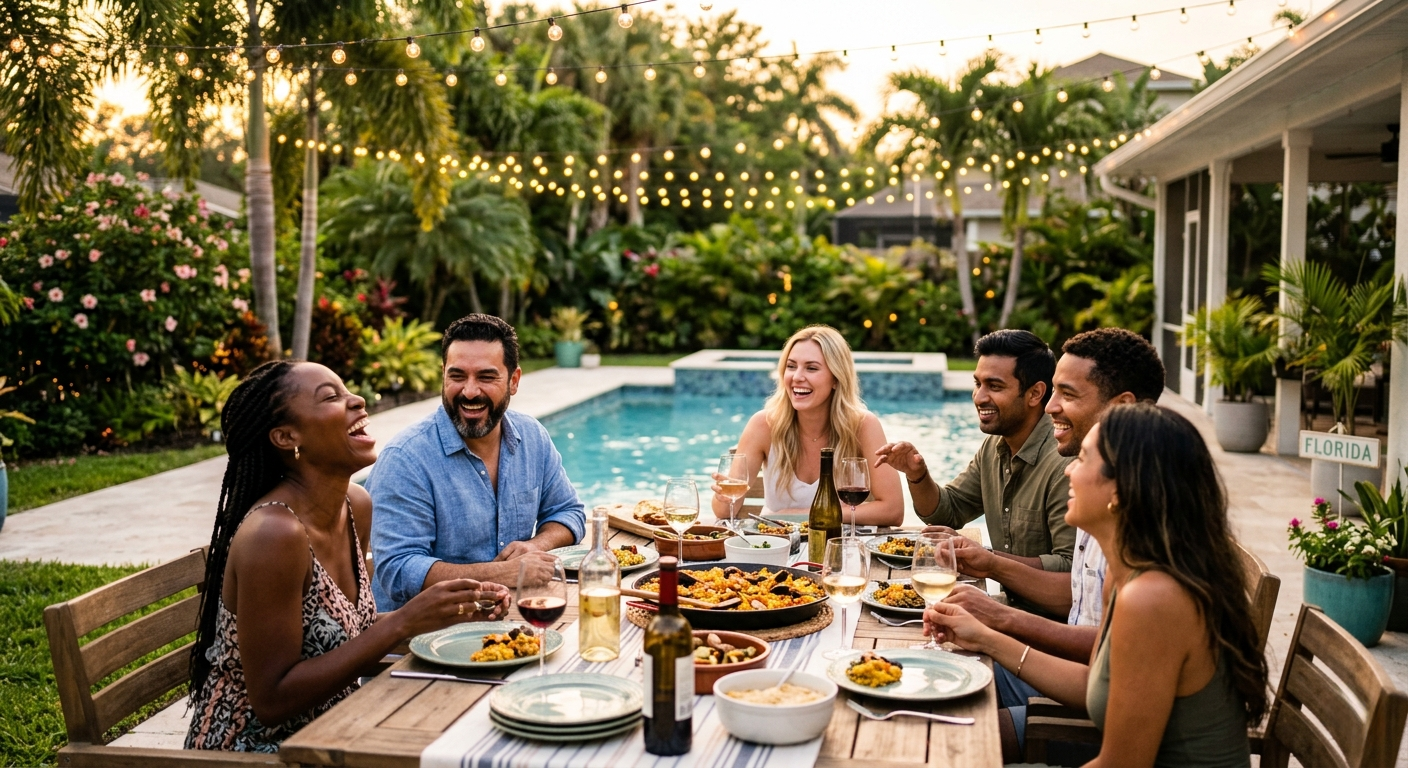
Host early and host often. You don't need to wait until your house is perfect. Invite neighbors over for a drink in the backyard. Organize a casual dinner with the other new families from school. The people who open their homes first tend to become the center of their social circle — not because they're the most outgoing, but because they made the effort.
Say yes to everything for the first six months. The random neighbor's barbecue. The school committee meeting. The charity 5K you'd normally skip. Not every event will lead to a lasting friendship, but the cumulative effect of showing up creates visibility and familiarity. People connect with faces they've seen more than once.
Find your "third place." Sociologists use this term for the spaces that are neither home nor work — the café where the barista knows your name, the gym where you see the same people every morning, the dog park where your Labrador has made more friends than you have. These ambient social spaces are where casual acquaintances become real friends, and Florida's outdoor lifestyle makes them especially abundant.
Leverage the expat and transplant communities. If you're relocating from the UK, there's a thriving British expat community in South Florida — complete with pubs that show Premier League matches, social groups, and informal networks that can ease the cultural transition. Similar communities exist for families from Latin America, the Northeast, and other regions.
A Note for Couples
Relocation stress is real, and it affects relationships. One partner often adjusts faster than the other — usually the one who has a local job or whose idea the move was. The partner who's left building a social life from a standing start, potentially without a professional anchor, can feel isolated. The best antidote is to acknowledge this dynamic openly and to invest in building individual social connections alongside shared ones. Both partners need their own people, their own routines, and their own reasons to feel at home.
It Gets Better — and Then It Gets Great
The families who are happiest in Florida are, almost universally, the ones who invested in community early. They joined things. They hosted people. They showed up even when they didn't feel like it. And at some point — usually between the first and second year — they looked around and realized they had a social life that was richer, more diverse, and more intentional than the one they'd left behind. That's the quiet upside of relocation: when you're forced to rebuild, you get to choose. And the community you build by choice is often stronger than the one you inherited by geography.
Relocating to Florida and want to land in a community that fits your family's lifestyle? Adam Jacobs has been through this transition himself and helps families find not just the right house, but the right neighborhood and network. Reach out at adam@jacobsrelocation.com.